
Vending Machines: An Exciting Investment Industry in 2026?
For decades, the vending machine business was perceived as an unglamorous cottage industry: coin jams, stale soda cans, and manual collection routes managed by regional mom-and-pop operators.
 Anekant Capital
•
Nov 9, 2026
•
4 min read
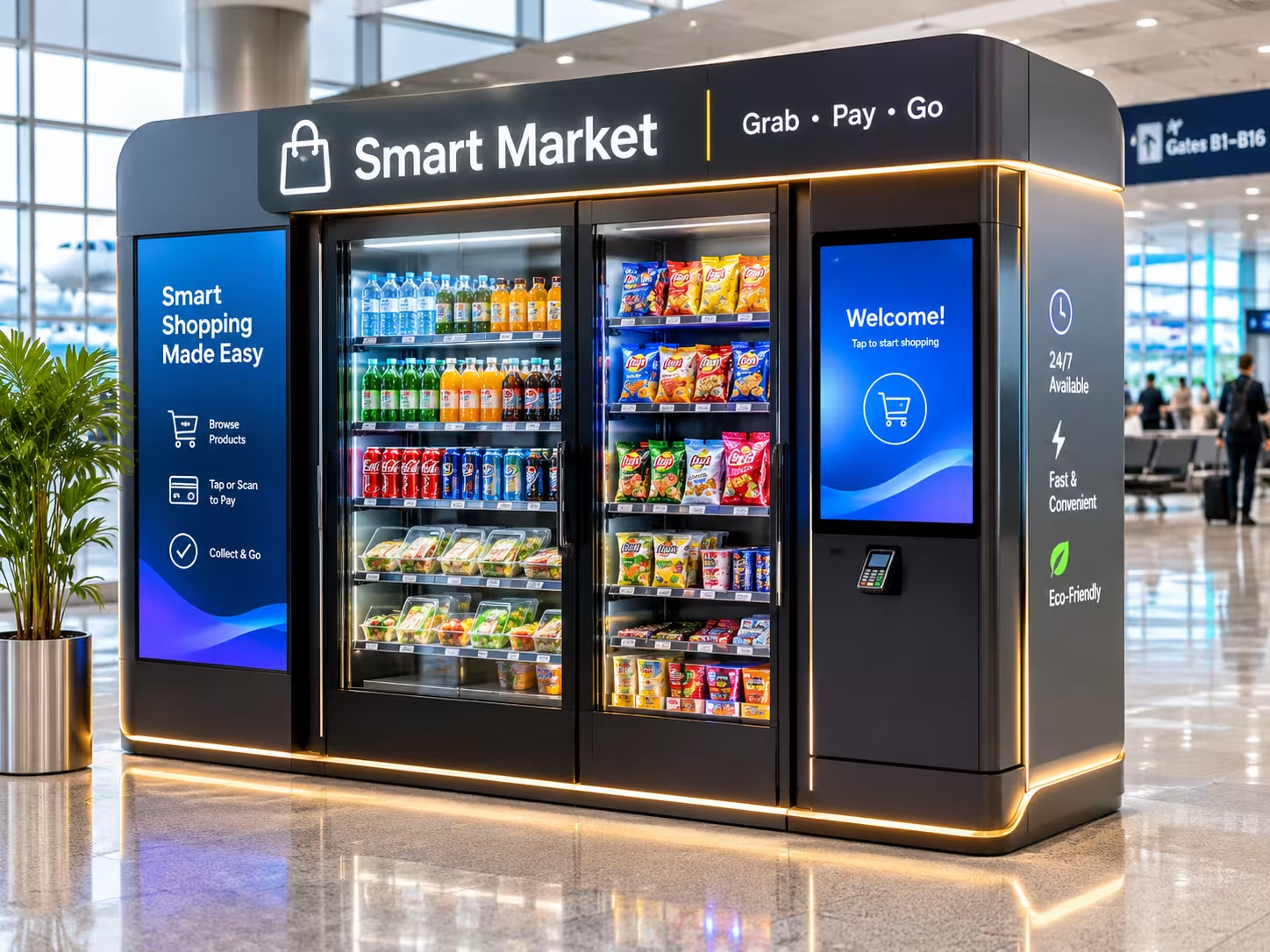
Table of Contents (7 sections) Tap to expand ▾
In 2026, however, that characterization is completely obsolete.
A convergence of powerful structural tailwinds—rising commercial real estate rents, chronic retail labor shortages, telemetry breakthroughs, and the universal adoption of tap-to-pay commerce—has quietly transformed unattended retail into one of the most compelling cash-flow plays in the modern business landscape.
Key Industry Numbers at a Glance (2026 Outlook)
- 10.7% Compound Annual Growth Rate (CAGR): Projected global growth across automated and unattended retail through 2030.
- Over 94% Cashless Transactions: Elimination of coin handling, physical cash theft, and route delays.
- 14 to 22 Months: Average capital payback window for high-performing smart units placed in prime corridors.
1. The Structural Shift: From “Snack Dispenser” to Micro-Storefront
The vending machine of 2026 is no longer just a cold soda dispenser tucked into a dark hallway. Today’s kiosks function as compact, unattended department stores and specialty cafes operating around the clock.
Forward-looking operators are capturing substantial margin expansion across high-value product categories:
- Specialty Hot Beverages & Fresh Food: Automated espresso stations that grind single-origin beans to order, alongside temperature-controlled grab-and-go artisan meals that capture gross margins of 60% to 75%.
- Travel Essentials & Cosmetics: Frictionless automated beauty bars placed in airports, luxury gyms, and transit hubs dispensing high-margin skincare, chargers, and premium toiletries.
- Over-The-Counter Wellness: Secure healthcare kiosks in corporate campuses and residential towers providing instant access to hydration, wellness supplements, and over-the-counter medication.
Consumers no longer view these machines as an act of desperation. They view them as immediate, frictionless convenience.
“Unattended retail provides what modern consumers demand most: instantaneous proximity and zero queue time.”
2. Telemetry, Computer Vision, and Dynamic Pricing
Historically, the single biggest operational bottleneck in vending was “blind route servicing.” Operators had to send a driver in a van simply to see which slots were empty, wasting fuel, time, and labor.
Modern smart vending in 2026 has solved this problem with cloud telemetry:
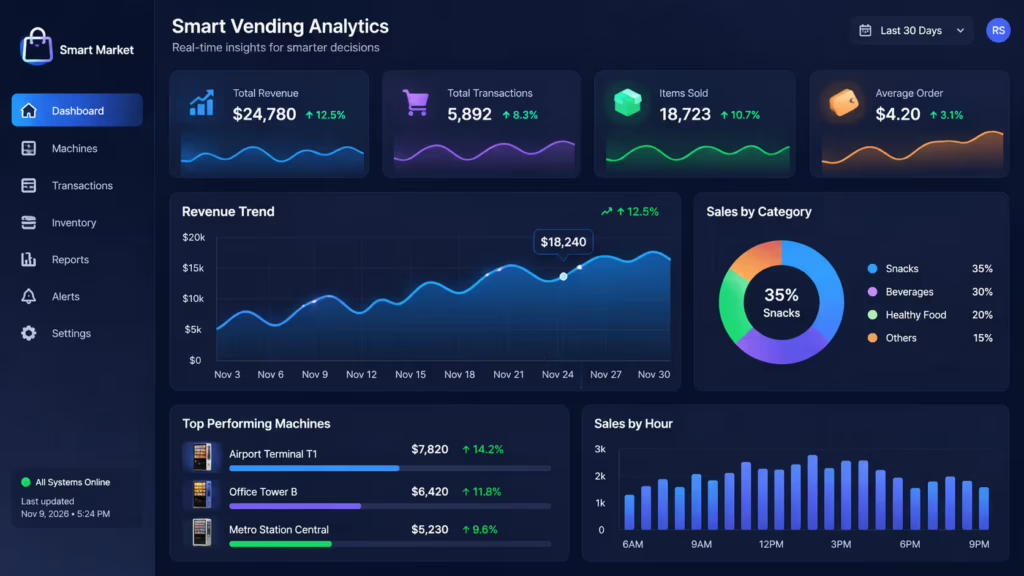
- Real-Time Inventory Tracking: Operators monitor stock levels, internal temperature, and mechanical health from an iPad or phone. Restock routes are only dispatched when machines hit predetermined thresholds.
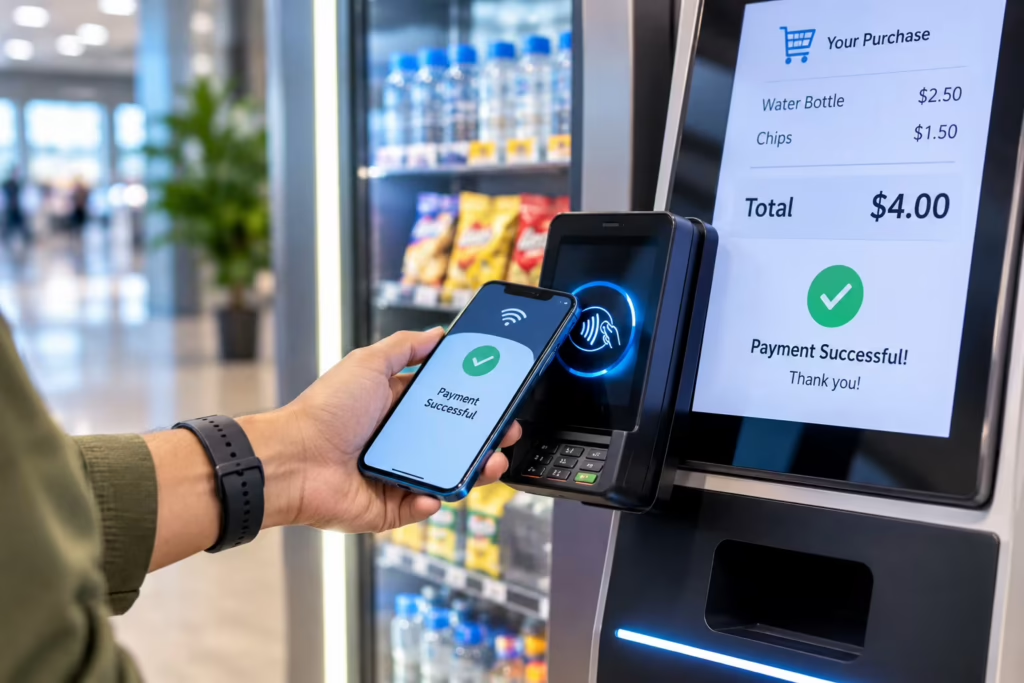
- “Grab-and-Go” Computer Vision: Smart fridges allow customers to tap an NFC card, open the door, take what they need, and walk away. Cameras and weight sensors automatically bill the card upon door closure, eliminating mechanical spirals and coin slots.
- Dynamic Algorithmic Pricing: Intelligent systems adjust prices based on peak foot-traffic hours, temperature changes, and product shelf life, maximizing revenue and preventing perishable inventory loss.
3. The Investor Perspective: Unit Economics and Asset Flexibility
From a financial standpoint, smart vending combines the high margins of retail with the operational agility of a tech-enabled asset class.
Why the Economics Work
- Capital Efficiency: A top-tier, smart telemetry-enabled kiosk costs between $4,500 and $12,000. In comparison, opening a modular retail storefront easily costs upwards of $200,000 to $300,000 in leasehold improvements alone.
- Location Agility: If foot traffic in a corporate building drops due to hybrid work policies, an operator doesn’t carry a broken 5-year lease. The machine can be unbolted and redeployed to a hospital, university campus, or logistics warehouse within 48 hours.
- Immediate Working Capital: Because all transactions are processed digitally through credit cards, Apple Pay, and UPI, receivables settle in near real-time, eliminating payment delay risks.
4. The Critical Challenges: Where Operators Struggle
While the industry’s unit economics are compelling, automated retail is far from passive income. Long-term profitability depends on mastering two core operational hurdles:
- Securing Favorable Location Contracts: The ultimate moat in automated retail is real estate access. Winning agreements with transit authorities, hospitals, and corporate property managers usually requires a 10% to 20% revenue-share arrangement. Operators who master property relations build massive competitive moats.
- Route Density: Operating single machines scattered across vast geographic distances quickly eats up profits in travel time and vehicle maintenance. Scaled operators focus on cluster density—grouping 15 to 30 machines within a tight 10-mile radius to maximize operational efficiency.
The Bottom Line
In 2026, vending machines are no longer a relic of the past. Rebranded as unattended micro-retail, the sector offers scalable, cash-flowing infrastructure with high capital returns and low labor overhead.
For entrepreneurs, regional operators, and private investors looking for defensive, inflation-resistant cash flows, automated smart retail has firmly earned its place on the radar.
Interested in discussing this research note?
Connect directly with our investment collective to explore advisory mandates, proprietary investment models, and collaborative market intelligence.
Get in touch ↗